
Why Why again why. Why people do drugs. LINDSAY LOHAN just 20 days after she left rehab she started drugging. Its an old news but my question is drugs are for loosers is Lohan a looser. She got money and fame. A bright future maby, then why Addicted to drugs?.I dont get it. Many celebrity died and lost their career cecause of drugs. So aren't they educated enough to understand this simple matter!!!!!!!! Alas.....
LINDSAY LOHAN LOVES DRUGS
What are some of the signs to look for?

CHANGE IN PERSONALITY -
Your loving child turns mean.
This can happen with the onset of puberty, but it is much worse when there is substance abuse going on. Do you feel like no matter what you say or do, you just can't win? Are you afraid or reluctant to confront your child due to violent outbursts or reactions from them when you attempt to inquire about any part of their lives? Just remember, when a kid is backed into a corner, he may have discovered that the best defense is an offense, and many teens, particularly boys, find that by coming back with loud yelling, they can be very intimidating to their mothers. Suspect drug use if your child has lately become very irritable, unpleasant to or bullying of other family members, very easy to provoke, starts to use a lot of profanity seems tired, worn out and apathetic a lot of the time, or develops a nagging cough, appears to have the sniffles or runny nose, or develops nosebleeds frequently.
CHANGE IN APPEARANCE -
Your child's appearance has gone down the tubes.
This might include long stringy hair, too much makeup in girls (or boys), clothes that are way too big and don't fit, all black everything, and rock teeshirts of bands that have values that you deplore (Marilyn Manson immediately comes to mind). If your child is espousing these bands, there is a chance he will also try to "live up to the image" that these bands project. Two of my kids have permanent scars from cutting themselves in imitation of Marilyn Manson, carving anarchy signs into their hands, arms, and stomachs. We want our kids to have some freedom in how they dress and hate to battle with them regarding their choice of clothes. However, sometimes a parent must put his foot down on certain styles. Black rock tee-shirts with obnoxious bands on them may attract other kids who use drugs and cause kids who are not into that scene to shy away from your child.
Obviously, there is probably a kid or two out there in the world who dresses like this and is not up to anything. From my own experience, I do not know one single teen who chooses to dress like this who is not using drugs. This type of clothing is a magnet for other teens who use drugs. Teens who are not using drugs generally do not want to attract that type of friend. However, keep in mind that there are also plenty of teens who sport a very "preppy" look, who are also abusing alcohol and other drugs, so the manner of dress is just one part of the big picture of teen drug abuse.
Also be very wary of the big baggy pants with lots of pockets. These pants, which are quite popular now, provide lots and lots of hiding places for contraband, and there are a few kids who wear these pants with the sole purpose of shoplifting because there are so many places to put things. Another rather unusual tip-off is if you go to buy your child shoes and he states his feet have grown and he now needs a size twice as large as the last time you bought him shoes. Don't take him at his word...measure his feet with one of those metal foot measuring devices found in shoe stores. Our son did this and we discovered that he was hiding contraband in the toes of his shoes. I have also found out that in certain brands of tennis shoes, like Nike, the kids are able to pull up a label from the heel inside the shoe, which creates a little compartment where drugs can be hidden.
CHILD SEEMS VERY VAGUE, APATHETIC, DISINTERESTED, OUT OF IT -
Your child seems unusually apathetic, staring into space a lot, not focused on anything, is very vague when you try to carry on a conversation, and generally seems out of it.
This could mean they are high while you are talking to them or that they are coming down from some type of drug that they did the day before, like acid (LSD) or ecstacy, which depletes the serotonin in a teen's brain and can cause very depressed type of behavior. However, note that this could also be a sign of major depression and suicidality, so if this behavior persists, parents PLEASE DO NOT IGNORE IT; seek professional help for your child.
CHILD IS REPEATEDLY COMING HOME LATE OR NOT AT ALL -
Problems with keeping curfew or not showing up at all until the next day, stating they spent the night at so-and-so's house but "forgot" to call you.
Don't believe it for a minute. When kids do this, there is a good chance they have gotten high on something and were in no condition to call or come home, or they passed out somewhere, or because they were high, they didn't care about anything, including the consequences of not abiding by their curfew. If a child has been brought up to let his parents know where he is, he will generally call them if he is of sound mind and will be worried about the consequences of NOT calling.
RED EYES -
Eyes are red all the time or you are finding bottles of Visine or eye drops in your teen's room, pockets or bookbag.
If a child is trying to cover up his red eyes, he is either smoking pot or possibly huffing, both of which can cause red eyes. If you are finding bottles of Visine or other eye drops, this is a very good indication that your child is up to something. Teens rarely buy things like eye drops unless they are trying to hide something from you.
On the subject of hiding things from you, finding breath mints or breath sprays among your child's possessions can sometimes indicate an attempt to hide the smell of alcohol on the teen's breath.
SIGNS OF HUFFING (INHALANT ABUSE) -
Your child seems to be doing excessive cleaning with various cleaning solutions or has a chemical smell on his clothes.
I am going to spend a little more time on this subject because I have dealt with huffing in my son and it left him hearing voices all the time. Huffing, or inhaling various household chemicals in order to get high, is a very, very dangerous activity for your child to engage in. You wouldn't think your child would be so stupid as to do something like this, but huffing might be taking place if you are noticing a chemical or solvent smell coming out of your child's room on a regular basis. When I would ask my son about this smell, he always appeared busy and would say he was cleaning. Unfortunately, since it sounded logical, I didn't question him further. If you smell chemicals frequently on your child's clothes or in his room, please get very suspicious. Huffing burns holes in your child's brain and can cause permanent brain damage, so it is better to investigate and risk being wrong than to ignore it and pay the consequences later with a child who either dies or ends up with severe brain damage.
Young kids are likely to begin on the road to substance abuse by huffing because the chemicals needed are usually lying around the house. Some of the things kids might huff, or inhale, include White-Out (yes, the White-Out that is used in an office). If your child is asking you to buy him White-Out for a school project, your suspicion level should go way up. Schools never require the use of White-Out in school projects. Common markers, especially the large-sized markers, are also used for huffing, so if your child is walking around with markers in his/her pocket, beware! I remember wondering why all of my dry-erase markers kept disappearing. Kids will also huff anything out of an aerosol can, including the aerosol out of whipped cream cans, spray-on leather cleaners, etc.; in fact, any aerosol can of any type can be huffed by the kids. Believe it or not, Glade air freshener is a favorite for kids who like to use inhalants!
Huffing causes severe headaches as well as chronic congestion. My son ended up using an albuterol inhaler because of an asthma-like condition that wouldn't go away. I didn't have a clue that it was self-inflicted due to huffing. If your child is showing any of the other signs above along with lots of headaches, this is another cause for you to get very suspicious.
ABUSE OF COLD AND COUGH MEDICINES -
Yes, folks, kids are abusing cough syrups and cold pills in record numbers
I thought maybe this was just a local thing, but I had the occasion to speak with a boy who lives 1000 miles from us, and he not only knew all about this trend but admitted to having used cold pills to get high as well. This is much more common than any parent would ever suspect. Every kid I have asked about this has admitted to knowing about it and many times has even admitted to using cold and cough products for the purpose of getting high.
The cold preparation of choice is Coricidin cold pills (which has been yanked from the shelves of numerous stores in our area due in part to this problem). Coricidin comes in a box with 16 pills. I have talked to numerous kids about this, mostly because I couldn't believe it, and all admitted to stealing or buying the Coricidin over the counter and then eating the entire box, which supposedly gives a high similar to the club drug, ketamine, complete with hallucinations. Some of the larger boys have even admitted to me that they took two or more boxes in one sitting (32+ tablets) in an effort to get high. If cold tablets are not available, they are likely to drink an entire bottle of cough syrup with or without alcohol. Nyquil and Robitussin, in particular, are brands a teen might seek out. It is a wise parent who does not keep bottles of these types of cold preparations in the medicine cabinet when there are teens in the house.
Another cold preparation to look out for is Sucrets, which can be crushed and boiled to come up with a powder which contains dextromethorphan, also known as DXM. DXM gives a high similar to drinking several bottles of cough syrup, like Robitussin, and can even cause hallucinations. If you are finding lots of cold preparations around your child's room or in his/her schoolbag, you need to get very suspicious about what your child might be up to.
ABUSE OF HOUSEHOLD ITEMS AND HIDDEN PARAPHERNALIA -
There are other things around your house that you might never suspect that your teen could be using to get a high
In continuing with the subject of using common household items to get high, another thing some teens have used is pure vanilla extract that you use in cooking because it contains alcohol, and mouthwash preparations, such as Listerine, which also contain alcohol. In fact, any product that contains alcohol that your teen could drink will be used if your teen is into this type of high.
Kids have also discovered that nutmeg will give a high similar to LSD and, in fact, is known as the "poor man's LSD." However, there are some rather unpleasant side effects to doing this, including headaches and nausea.
Regarding paraphernalia, you may occasionally uncover a pot pipe during a room search, but many teens have discovered that there are products for sale which ingeniously hide the fact that the item can be used for drugs. There are pipes available now that look like a roll of mints, a makeup brush, a battery, or a cigarette lighter, so if you are searching your child's room for paraphernalia, it is wise to keep this in mind and check out anything that does not seem to quite fit with what your child would ordinarily need.
There are also web sites that kids can get into that tell them how to extract various substances from household products, like hair spray, paint strippers, and acetone-free nail polish remover, to come up with pure drugs. Some of these sites have the word "cookbook" in them. It is very important that you monitor teens' Internet activities through the use of one of the "guardian" type of services that many Internet service providers now offer. There's an awful lot of dangerous garbage out there, and our kids do need to be protected from it, whether they agree with us or not.
PRESCRIPTION MEDICATIONS -
It seems like certain medications are disappearing or being taken faster than the prescription calls for
Parents, if you see this happening, it is not your imagination. If your child has been diagnosed with a psychiatric illness such as ADD, ADHD, bipolar illness or major depression, chances are he/she has also been given a prescription for at least one psychiatric medication, which may or may not be helping. But did you know that one pill of Ritalin or Adderall (common ADHD medications) can be sold on the street for anywhere between $1.00 and $5.00?
Both Ritalin and Adderall are in much demand as drugs of abuse, which are often crushed and snorted by teens to get high. Many enterprising kids have resorted to selling their own prescription drugs to make a few dollars on the side. (Please also see Help! I'm Addicted to Adderall)
Dexedrine, another ADD medication, might go for even more. And kids are more than willing to pay a dollar or two for other psychiatric drugs, such as Prozac, Celexa, and other antidepressants.
Parents, if your teens are on psychiatric medications, no matter how much you trust your child, those medications should be kept in a secure locked cabinet or a lockbox, which can be purchased at any discount store or office supply store. You should be administering these medications to your child and you should check to make sure he is actually taking them. Why leave something like this to chance? In our case, my child was not only stealing and selling his medications, he was sometimes taking up to five pills per day more than the prescription called for in an effort to get high. However, some days he didn't want to take his medication, and although I stood there and thought he was swallowing his medications, he was actually cheeking them. He would then would take them out of his mouth and hide them in his drawer to sell or abuse himself later on. I discovered this when I was looking for something else and came across more than a week's supply of his drugs in little plastic pouches. I eventually discontinued some of his medications altogether rather than deal with the abuse that was going on.
QUESTIONABLE FRIENDS -
You are pretty sure your child's close friends are abusing drugs
Your child may even admit that some of his friends are using drugs, but will always deny that he/she has any part in it. If your child is spending a lot of time with these friends, don't believe it. If you really think that drug-using friends are considerate enough not to do drugs in front of your child or that your child is just sitting around watching them use while not using himself, think again. If your child is actually resisting taking the drugs, you can be sure he is being goaded and coaxed into using along with the friends. Misery loves company, and it's no fun to get high by yourself. Kids who are not using do not pick users as friends. It is also no fun to sit around and watch other people get stupid on you. So you can bet that if your child's friends are using drugs, he is using with them.
LOSS OF WEIGHT -
Your child is looking unusually thin to you, but denies having lost any weight when you question it.
This could be a cover up for anorexia/bulimia, which is a serious problem requiring medical attention and intensive counseling, particularly in girls. It also could be a cover up for the abuse of cocaine and methamphetamines, which speed up the system and take away the appetite, thereby sometimes causing drastic changes in weight. In any case, loss of weight should always be checked out by a doctor to make sure there is not something more serious going on because many serious illnesses can also present with loss of weight.
EATING BINGES -
Your child comes home from being with his/her friends and cleans out your refrigerator.
This could also be a sign of anorexia/bulimia if it is accompanied by weight loss, especially if your child disappears into the bathroom immediately after eating and you suspect they are vomiting (purging).
However, this can also be a sign that your child has just been out smoking pot, which is notorious for causing "the munchies." If this behavior is accompanied by red eyes, slurred speech, nasty temper, uncontrollable laughing or exceptional drowsiness, you can be pretty sure that your child has been up to something, probably smoking pot. (However, if he is acting normally and he has just spent several hours in a backyard game of football or other strenuous sport, then don't worry too much about him eating you out of house and home.)
Keep in mind that the pot our kids get hold of today is many times stronger than the pot that was available when many of today's parents were kids, and thus is that much more harmful. Pot can cause permanent short-term memory loss, particularly in younger kids whose brains are still developing. One interesting fact that my son learned in his substance abuse program is that five joints of marijuana have the same harmful effects to the lungs as something like 113 cigarettes, so pot is in no way a "harmless drug" as many of its proponents would like us to believe.
See Is Marijuana a Harmless Drug?
Drug Abuse and Addiction:
Rehab, Self-Help and Treatment Options
Drug addiction is a treatable disorder. Like people with diabetes or heart disease, people in treatment for drug addiction learn behavioral changes and often take medications as part of their treatment regimen.
Source: National Institute on Drug Abuse
In This Article:
Types of drug treatment programs
Help for families
Finding a drug treatment program
Preventing drug abuse and addiction
Choosing a drug treatment program
Self-help programs for drug addiction
If you or anyone you love suffers from drug addiction, know there is hope. Real help is available. According to several studies, drug treatment reduces drug use by 40 to 60 percent— but typically only for those who stay in treatment for three months or longer. People recovering from drug addiction can learn new behaviors and take medications to help them overcome the physiological, psychological and social dynamics of their condition. Through engaging in a program tailored to meet the individual needs of participants, patients can return to leading healthy, productive lives.
What are the general types of treatment and rehab programs for drug addiction?
Treatment programs for drug addiction could be classified into two broad categories: short-term and long-term treatment methods. Short-term methods are usually six months or less in duration. These include residential therapy, medication therapy, and drug-free outpatient therapy. Longer term treatment may include methadone maintenance treatment for opiate-addicted individuals and residential therapeutic community treatment. Here is a closer look at the main treatment options:
Short-term residential programs
Short-term residential programs were originally developed to treat alcoholism, but expanded to include drug addiction with the rise of cocaine use in the mid-1980s. Since then, they have been applied to a variety of drug addictions. They are set up to be intense, but relatively brief programs of between 3 and 6 months. Most are based on the Minnesota Model, a method of drug addiction treatment that grew out of the success of the Alcoholics Anonymous, or 12-step model, of recovery. The elements of the Minnesota Model typically include:
Thorough assessment of all aspects of a client: physical, emotional, mental, behavioral
A personalized treatment plan for each participant
Attendance of 12-step meetings and application of the 12-step philosophy
Self-reflection with an emphasis on greater acceptance of personal responsibility, changing negative beliefs about self and others, and learning new coping skills
Group and individual therapy (80-90% done in groups)
Family support, education, and involvement
Extensive outpatient follow up and support
The Minnesota Model is conducted by a multidisciplinary team of professionals—chemical dependency counselors, psychologists, psychiatrists, nurses, etc. The purpose of the model is to enable addicted individuals to achieve a significant transformation in their basic thinking, feeling and acting in relation to themselves and others. The resulting life change is identified as basically spiritual, though non-religious, in nature and is associated with the positive influence of group affiliation.
Medical detoxification
Medical detoxification, more accurately considered a precursor to treatment, is the process of physiological withdrawal from chemical dependency under the supervision of a physician. It can be in an inpatient or outpatient setting. It is often thought of as a distinct treatment in itself, as withdrawal from certain classes of drugs such as alcohol, barbiturates and sedatives can be extremely dangerous or even lethal. Detoxification alone does not lead to lasting abstinence, since it does not address the psychological and behavioral facets of addiction.
Long-term residential programs provide 24-hour a day care, usually in settings other than a hospital. The most common of the long-term programs are the therapeutic communities (TCs), which involve stays of between 6 and 12 months. TCs typically serve drug-addicted individuals with more severe problems, who are often also dealing with mental illness and criminal behaviors. The emphasis of TCs is on resocializing the individual through the social context of the community, which includes other residents, staff, and the day-to-day activities that form the basis of the treatment.
The program is highly structured and often confrontational, as it is designed to make the participants aware of the social and psychological deficits that led to their addiction. As such, the treatment focuses on examining damaging beliefs and self-concepts, developing personal accountability and social responsibility, and adopting new, more harmonious and constructive ways of relating with others. Many include employment training and other on-site support services.
Methadone maintenance treatment
Methadone maintenance treatment is designed to help individuals addicted to opiates (such as heroin) wean themselves off their dependency and resume a productive lifestyle. These programs administer an oral synthetic opiate medication, usually methadone or LAAM, for a period of time long enough to help stabilize patients so they can find employment, keep away from the crime and violence of the street culture, and protect themselves against the risk of HIV from sharing dirty needles or engaging in high-risk sexual behavior. The medication administered has three effects:
To prevent opiate withdrawal
To block the effects of illicit opiate use
To decrease opiate craving
With the effects of the addiction neutralized, patients are more able to engage in counseling, which is provided in the best methadone maintenance programs in the form of individual and group therapy, or referrals to community-based medical, psychological, and social services.
Outpatient drug-free treatment
Outpatient drug-free treatment is an appropriate alternative for people who are employed, are abusers of drugs other than opiates, and have an established network of social support. Programs run the gamut from minimal, education-only treatment to the more common intensive day treatment programs which offer group counseling. Outpatient treatment is less expensive than residential or inpatient programs. Some outpatient programs are designed to treat patients who have medical or mental health problems as well as a drug addiction.
While the effectiveness of outpatient programs does not rival that of its residential counterparts, the drop in drug use after treatment is still significant. One study sponsored by the National Institute on Drug Abuse tracked over 10,000 drug users in treatment from 1991-1993. For patients reporting weekly or more frequent cocaine use, the percentage of use dropped from 41.7% in the year before outpatient drug-free treatment to 18.3% in the year after treatment.
Criminal Justice Treatment Programs
Research has shown that individuals under legal mandate to engage in drug treatment programs do as well or better as those participating voluntarily. Treatment programs administered by the criminal justice system are twofold:
Prison-based treatment programs employ drug education classes, self-help programs, and the Therapeutic Community model. During treatment, participants are segregated so that their progress is not impeded by exposure to the prison culture. Relapse rates are lower when prisoners continue treatment after rejoining the general prison population. A study of one such prison-based treatment program, called “The Delaware Model,” showed that treatment including a work release therapeutic community and community-based aftercare reduced the probability of rearrest by 57 percent and reduced the likelihood of returning to drug use by 37 percent.
Community-based treatment programs exist as alternatives to incarceration. These include pre-trial release contingent on entry into a treatment program and sanctioned probation. The Treatment Accountability and Safer Communities Program (TASC), for example, offers counseling, medical care, parenting instruction, family counseling, school and job training, and legal and employment services. Some of its features are early identification and assessment of drug-involved offenders and monitoring offenders through drug testing.
How do I find an appropriate drug rehab treatment program?
The Substance Abuse and Mental Health Services Administration (SAMHSA) of the U.S. Department of Health and Human Services offers an extensive listing of drug treatment facilities by location through their Substance Abuse Treatment Facility Locator. Simply click your state on the map and then type in your city and/or zip code for treatment locations and descriptions of services.
What are some questions to ask in choosing a drug treatment program?
Obviously, the quality of care and the credentials of the caregivers who assist in recovery from drug addiction are of utmost importance. The following list of questions to ask of prospective treatment facilities is taken from the online companion to the PBS television series Moyers on Addiction: Close to Home:
What type of accreditation or licensing does the program have? National accreditation programs (such as the Joint Commission on Accreditation of Health Organizations, the Rehabilitation Accreditation Commission, the National Committee for Quality Assurance, and All-States) look for elements of treatment that research has shown to be effective. Accreditors also require a well-documented patient complaint process. Remember that " state licensing" is not the same as accreditation, since states vary widely in their licensing requirements. Failure to obtain accreditation may mean nothing—but it could indicate fringe status or, in the worst case, a quasi-cult or abusive form of "care."
Have there been studies to measure the effectiveness of the program's treatment methods? Treatment effectiveness is a new field of study, so it is still too early to expect all providers to have full research-based evaluations of their methods. Still, it is not too early for them to be planning these studies. The most objective evaluations usually come from external agencies rather than " in-house" evaluators.
What medication does the program support or prescribe to treat an addicted patient' s other possible medical problems? Is its staff knowledgeable about and willing to consider the use of medication that may help treat addiction? Many of addicted patients' medical symptoms may be complications of addiction, and clear up after a period of sobriety, but this is not always the case. Clinical depression, anxiety, or other conditions can undermine chances for recovery. The best treatment programs evaluate patients for such problems shortly after admission and offer appropriate medical care, including medication if indicated. Also, medications such as methadone, naltrexone, and disulfiram (Antabuse) can be effective in helping some addicts. Treatment centers should discuss them with patients.
What sort of "aftercare" does the program offer? Short-term treatment by itself is not enough to sustain recovery in most patients. Aftercare is crucial, preferably at least a year of weekly or biweekly outpatient counseling, plus participation in 12-Step programs (such as Alcoholics Anonymous) or other addiction self-help groups (such as Rational Recovery or Women for Sobriety). A good treatment program will actively help the patient integrate into a self-help group, although patients sometimes have to " shop around" to find the one in which they feel most comfortable.
What does the program do about relapse? Unfortunately, relapse is a common occurrence in substance abuse treatment—just as it is in treatment for other chronic illnesses. A good program includes relapse prevention classes that teach patients to recognize and avoid or deal with situations and emotional states that could trigger relapse. It should also have a plan for the patient's re-entering treatment and/or support groups to prevent a one-time lapse from becoming a full-blown return to active addiction. Relapse—though demoralizing—can be an important learning experience, but the individual may need further help.
What kinds of “self help” programs are available for overcoming drug addiction?
The National Institute on Drug Abuse states that “self-help groups can complement and extend the effects of professional treatment.” Many people with drug problems kick their addiction or maintain through their participation in non-professional, peer-directed groups. Among these are:
12–Step Programs
The most prominent self-help group for addiction is the 12-step program, a spiritually-based set of principles for living first conceived by the founders of Alcoholics Anonymous (AA). Since the formation of Alcoholics Anonymous in 1935, this self-help model has been adopted by other groups struggling with addiction, leading to the formation of Narcotics Anonymous, Cocaine Anonymous, Marijuana Anonymous, Crystal Meth Anonymous and others. The movement is still growing. In 1978, there were fewer than 200 registered Narcotics Anonymous groups in three countries. In 2005, those numbers rose to 21,500 registered groups, holding over 33,500 weekly meetings in 116 countries.
The 12-Step meetings are facilitated by fellow addicts who share their strength and experience in applying the program principles to stay drug-free. Attendance is voluntary, membership is free, and participation is entirely devoid of professional guidance. The program is structured around admitting powerlessness over the addiction, surrendering to a higher power of one’s own understanding, and drawing on group strength and support to find acceptance of oneself regardless of past actions or the tendency towards addictive behavior. The program includes a fearless inventory of one’s personal history and taking responsibility for reshaping life into a meaningful experience of service to self and others.
Research bears out the program’s effectiveness. In a study conducted by Dr. Robert Fiorentine of the UCLA Drug Abuse Research Center, 262 patients were interviewed 6 months after completing treatment at different facilities in the Los Angeles area. 86.4% of those who attended at least one 12-Step meeting per week after treatment maintained their abstinence, whereas only 48.4% remained drug free who did not attend weekly meetings. These results held up regardless of motivation; simple participation made the difference.
Smart Recovery
Smart Recovery is based on the principles of Cognitive-Behavioral Therapy (CBT). It differs from the 12-Step program in philosophy, in that it views addiction more as a complex maladaptive behavior than as a disease. The program offers specific tools and scientific techniques to help individuals gain independence from any addiction—be it to a substance or activity support participants. Smart Recovery utilizes the following 4-point method of recovery:
Enhancing and Maintaining Motivation to Abstain
Coping with Urges
Problem Solving (Managing thoughts, feelings and behaviors)
Lifestyle Balance (Balancing momentary and enduring satisfactions)
Smart Recovery is practiced in over 300 meetings around the world, and in16 meetings online. The method is purported to work even for those individuals whose ultimate goal is not abstinence, but managed use of their addictive substance. Smart Recovery recognizes that there are many paths to healing, and does not discredit any other means that help with the problem of addiction.
Secular Organizations for Sobriety (SOS)
Secular Organizations for Sobriety (SOS) is a network of independent meetings that promotes abstinence from alcohol and drugs, and provides peer support for others struggling with the same issues. SOS credits the individual for achieving and maintaining his or her own sobriety, as opposed to the 12-Step model of reliance on a higher power. It emphasizes honest, clear, and direct communication of feelings, thoughts, and knowledge to aid people in choosing rational approaches to living without drugs. Some of the tools used in SOS meetings are:
Sobriety—this is priority one, no matter what!
Seriousness—the addiction is nothing less than life or death
Determination—there is no turning back, especially if it gets rough
Easily obtainable goals—success breeds success. Reach for the moon later.
Listening—especially to people with long-term sobriety
Do it now—procrastination is an anti-tool, feeding the negative and working against self-esteem.
Credit yourself—for your attainment and maintenance of sobriety.
Women for Sobriety
Women for Sobriety was founded in 1976 to meet the unique needs of women alcoholics, whose recovery in AA was found to be less successful than that of men. It since been adapted to women addicted to drugs. The method is based on the premise that the psychological needs of women in recovery are different than for men. Participants hold weekly meetings in small groups of 6-10 women, with a structured format for confidential discussion.
The core of the approach is the “New Life” Program of Positivity, based on Thirteen Statements to encourage emotional and spiritual growth as a means of recovery. Women are encouraged to arise each morning fifteen minutes earlier than usual and go over the Thirteen Affirmations. They then take one statement and use it consciously all day. At the end of the day, they review what effects use of the affirmation had on their state and their actions.
What help is available for the families of individuals with a drug abuse problem?
Nar-Anon is a 12-Step program formed for families of individuals addicted to drugs. Nar-Anon groups are patterned after Al-Anon groups and help family members learn to recognize and avoid enabling behaviors, take better self-care (regardless of the behavior of the addicted person), and improve the interpersonal dynamics within the family that contribute to and/or are impacted by the problem of drug abuse.
What are the most effective methods for preventing drug abuse and addiction?
The research-based evidence suggests that prevention efforts be aimed towards reducing risk factors among children and adolescents. The National Institute on Drug Abuse published a booklet called Preventing Drug Use: A Research-Based Guide, which outlined 16 prevention principles to help parents, educators, and community leaders develop and implement effective drug prevention programs. Some of the key findings were:
Risk factors change with age. Risk factors within the family have greater impact on a younger child, while association with drug-abusing peers may be a more significant risk factor for an adolescent.
Early intervention with risk factors (e.g., aggressive behavior and poor self-control) often has a greater impact than later intervention by changing a child’s life path (trajectory) away from problems and toward positive behaviors.
Family bonding is the bedrock of the relationship between parents and children. Bonding can be strengthened through skills training on parent supportiveness of children, parent-child communication, and parental involvement.
Parental monitoring and supervision are critical for drug abuse prevention. These skills can be enhanced with training on rule-setting; techniques for monitoring activities; praise for appropriate behavior; and moderate, consistent discipline that enforces defined family rules.
Some of the most promising trends in prevention aim at school-based programs that integrate social and life skills training to teach kids how to resist drugs. This is a practical training program based on real-life examples that teaches adolescents coping skills, rather than merely giving them facts about drug abuse and the consequent health risks.
The Life Skills Training program, developed at Cornell University and used in middle schools, teaches students to develop skills in resisting social pressures to use drugs and encourages anti-drug attitudes in them. The program has shown it can reduce use of tobacco, alcohol, and marijuana among teenagers by as much as 75 percent. Likewise, the message that parents send to their kids about drug use, either overtly or through example, greatly increases the probability of their children using. Karol Kumpfer, Ph.D., president of the Society for Prevention Research, says it is important for parents to set rules and stay connected to their children. "Teens actually listen to their parents. Setting rules about substance abuse has a major effect."
What drugs are most commonly abused and what are their effects?
Almost all drugs have the potential for addiction and abuse, from caffeine to prescription medication. However, the majority of non-alcohol-related drug problems are due to use of the substances listed below. These drugs affect users' brains and bodies in different ways, producing symptoms of intoxication and abuse that are unique to each substance.
Marijuana
Downers
Uppers
Hallucinogens
Narcotics
Inhalants
Steroids
Why do people use and abuse drugs?
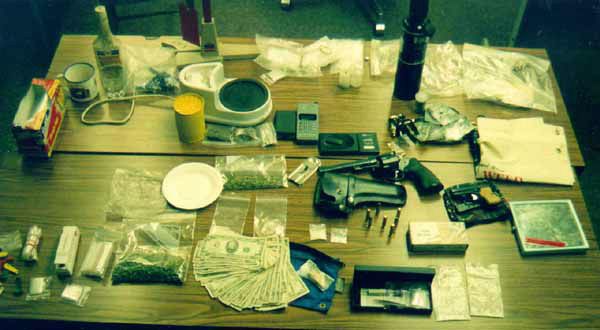
There are many reasons why people use drugs. Some people use drugs because they like the rush it gives them or because they are thrill-seekers. Others may try a drug out of curiosity or because their friends do it. However, many people use drugs in order to cope with unpleasant emotions and the difficulties of life. In fact, the National Alliance on Mental Illness estimates that around 50% of drug abusers also suffer from a mental illness such as depression, anxiety, bipolar disorder, or schizophrenia.
People who are suffering emotionally use drugs—not in order to get high—but to feel normal. Drug use can be a seemingly attractive and easy escape from all kinds of problems. Speed might be used to fight feelings of inferiority, sleeping pills to deal with panic attacks, or painkillers to numb depression. However while drug use might make a person feel better in the short-term, this attempt to self-medicate ultimately backfires. Instead of treating the underlying problem, drug use simply masks the symptoms. Take the drug away and the problem is still there, whether it be low self-esteem, stress, or an unhappy family life. Furthermore, prolonged drug use eventually brings its own host of problems, including major disruptions to normal, daily functioning. Unfortunately, the psychological, physical, and social consequences of drug abuse and dependence are often worse than the original problem the user was trying to cope with or avoid.
See Helpguide's Dual-Diagnosis for more on co-occuring psychological disorders and substance abuse problems.
People who are suffering emotionally use drugs—not in order to get high—but to feel normal. Drug use can be a seemingly attractive and easy escape from all kinds of problems. Speed might be used to fight feelings of inferiority, sleeping pills to deal with panic attacks, or painkillers to numb depression. However while drug use might make a person feel better in the short-term, this attempt to self-medicate ultimately backfires. Instead of treating the underlying problem, drug use simply masks the symptoms. Take the drug away and the problem is still there, whether it be low self-esteem, stress, or an unhappy family life. Furthermore, prolonged drug use eventually brings its own host of problems, including major disruptions to normal, daily functioning. Unfortunately, the psychological, physical, and social consequences of drug abuse and dependence are often worse than the original problem the user was trying to cope with or avoid.
See Helpguide's Dual-Diagnosis for more on co-occuring psychological disorders and substance abuse problems.
What are the signs and symptoms of drug addiction and abuse?
The more drug use begins to affect and control a person's life, the more likely it is that he or she has a drug problem. Unfortunately, substance abusers are often the last ones to recognize their own symptoms of dependence and addiction. If you suspect that a friend or loved one is abusing drugs, it's important to remember that drug abusers often try to conceal their symptoms and downplay their problem. But there are a number of warning signs you can look for:
Inability to relax or have fun without doing drugs.
Sudden changes in work or school attendance and quality of work or grades.
Frequently borrowing money, selling possessions, or stealing items from employer, home, or school.
Angry outbursts, mood swings, irritability, manic behavior, or overall attitude change.
Talking incoherently or making inappropriate remarks.
Deterioration of physical appearance and grooming.
Wearing sunglasses and/or long sleeve shirts frequently or at inappropriate times.
No longer spending time with friends who don't use drugs and/or associating with known users.
Engaging in secretive or suspicious behaviors, such as making frequent trips to the restroom, basement, or other isolated areas where drug use would be undisturbed.
Talking about drugs all the time and pressuring others to use.
Expressing feelings of exhaustion, depression, and hopelessness.
Using drugs first thing in the morning.
What is drug abuse and substance abuse?
Drug abuse, also known as substance abuse, involves the repeated and excessive use of a drug to produce pleasure or escape reality—despite its destructive effects. The substances abused can be illegal drugs such as marijuana and cocaine, or legal substances used improperly, such as prescription drugs and inhalants like nail polish or gasoline. But whatever the drug of choice, substance abuse can be identified by the maladaptive way in which it takes over the user's life, disrupting his or her relationships, daily functioning, and peace of mind.
For those in the grips of drug abuse and addiction, their drug controls them, not the other way around. “Uncontrollable, compulsive drug seeking and use, even in the face of negative health and social consequences” is the essence of drug addiction. Drug addiction can be physical, psychological, or both. The Substance Abuse and Mental Health Services Administration refers to psychological dependence as “the subjective feeling that the user needs the drug to maintain a feeling of well-being." Using a drug to numb unpleasant feelings, to relax, or to satisfy cravings are examples of psychological addiction. On the other hand, physical dependence refers to the physiological effects of drug use. Physical addiction is characterized by tolerance—the need for increasingly larger doses in order to achieve the initial effect—and withdrawal symptoms when the user stops.
fpa Response To 'Sex, Drugs, Alcohol And Young People' Report, UK
Responding to the publication of the Independent Advisory Group (IAG) on Sexual Health and HIV seminar report 'Sex, Drugs, Alcohol and Young People' Anne Weyman, Chief Executive fpa said: "fpa welcomes this report and supports all findings of the review. We have to recognise that drugs and alcohol influence some young people's sexual behaviour consequently putting them at risk. This is why we need a national strategy relevant to young people's experiences. It would also connect the work of different organisations that are currently operating in isolation from each other. "As this report shows, young people receive messages and behavioural cues not just from family and friends but from different sources including advertising and the media. We know from the community based work fpa does with young people that this can affect decision-making. For the first time fpa will be including information about sex, drugs and alcohol in our campaign information for Sexual Health Week[1]. "Yet again fpa calls on the Government to introduce comprehensive Personal Social and Health Education in schools for all pupils to give them the information and skills they need to make informed decisions about their lives." fpa (Family Planning Association) is the only registered charity working to improve the sexual health and reproductive rights of all people throughout the UK1] Pillow Talk : taking the embarrassment out of talking about condoms is the theme of Sexual Health Week 6th- 12th August 2007.
Subscribe to:
Comments (Atom)
